

Stop calling it “aggressive”: Why vague behaviour labels can cause harm in Positive Behaviour Support

In Positive Behaviour Support, the behaviour definition is not admin. It is the clinical foundation. When we use vague or value-laden labels like “aggressive”, “non-compliant”, “manipulative”, “disruptive”, “refuses”, or “attention-seeking”, we are not describing behaviour. We are making a judgement. And judgement-based definitions create real risk for people with disability. As Positive Behaviour Support practitioners, we have a unique opportunity to support culture change within teams and families so that people with disability who have behaviours of concern can live better lives!
What vague definitions look like (and why teams end up misaligned)
When a behaviour is described as “aggression”, one staff member might mean yelling, another might mean pushing past someone, and another might mean property damage. In practice, different staff respond differently, data becomes meaningless, and the person experiences inconsistent rules and inconsistent consequences. That inconsistency alone can escalate distress and increase the likelihood of the very behaviours everyone is trying to reduce.
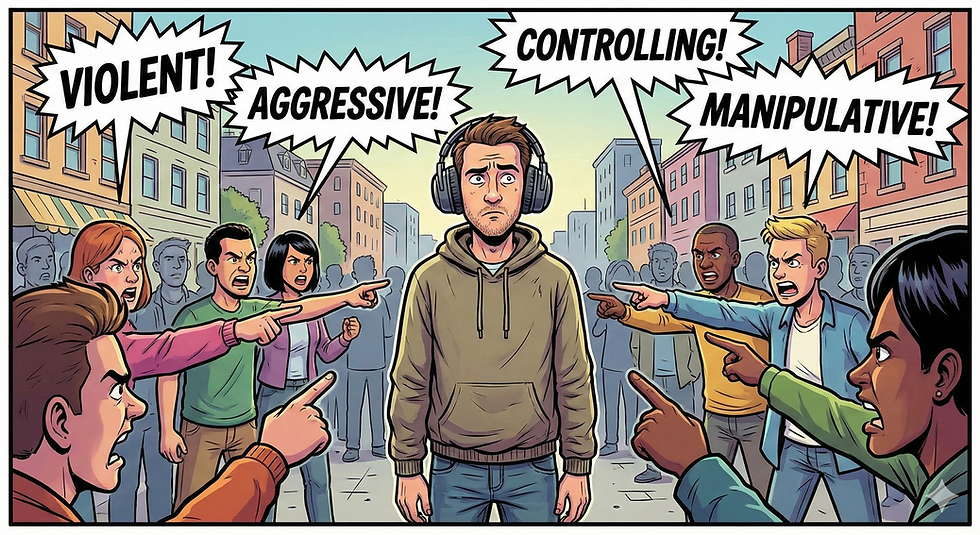
How vague definitions can actively cause harm
Poor definitions do not just make Positive Behaviour Support less effective. They can lead to interventions that target the wrong thing, and in some cases, restrict or suppress behaviours that are actually adaptive or protective for the person. Examples:
We pathologise self-advocacy: “Refusal” is recorded, but the observable behaviour is “says ‘no’ and moves away when asked to do something”. If we treat this as a behaviour of concern, we risk teaching compliance rather than supporting choice, consent, and autonomy.
We mislabel sensory or regulation needs: “Disruptive” becomes the label, but the observable behaviour is “hums, rocks, or paces when overwhelmed”. If we suppress these, we can remove a key self-regulation strategy and increase distress, shutdown, or escalation.
We escalate risk through the wrong responses: “Aggressive” is assumed to mean intent to harm, so staff respond with threat-based control strategies. But the observable behaviour might be “swats hands away during personal care”, which may reflect fear, pain, trauma triggers, or loss of control. A control-heavy response can worsen risk, increase reactivity, and damage trust.
We inadvertently justify restrictive practices: If the behaviour is not precisely defined, the perceived risk can inflate, and restrictive responses can be proposed or maintained without a tight behavioural rationale and clear outcomes monitoring.
Why defining behaviour properly helps you decide whether it is actually a behaviour of concern
Defining behaviour in observable terms forces a critical pause: is this behaviour causing harm, or is it something we can accept, accommodate and embrace in a neuroaffirming society? Not all “challenging” behaviour is harmful. Some behaviours are simply different ways of communicating, regulating, or asserting boundaries. A precise definition helps distinguish:
Behaviours that cause harm (risk of injury, significant property damage, serious interference with participation or rights)from
Differences or preferences should respect (stimming, needing breaks, avoiding overwhelming situations, direct communication, saying no).
This distinction matters ethically. Positive Behaviour Support should never default to “reduce the behaviour” without first clarifying whether the behaviour is genuinely harmful and whether the goal is aligned with the person’s rights, dignity, and quality of life.
The criteria for calling something a behaviour of concern
A useful rule of thumb: a behaviour of concern is behaviour that is of such intensity, frequency, or duration that it places the person or others at risk of harm, results in significant property damage, or seriously limits access to ordinary community settings and participation. The key is that the “concern” is about harm and impact, not about inconvenience, nonconformity, or staff preference.
Before you label a behaviour as “of concern”, ask:
What is the actual observable behaviour, in plain language?
Who is being harmed, and how? (physical, psychological, social, rights-based harm)
What is the intensity, frequency, and duration?
What is the functional impact on the person’s life (not just service delivery)?
Is this behaviour actually adaptive, communicative, or protective in context?
Are we trying to reduce harm, or trying to reduce difference?
A practical fix: write definitions that two people could record the same way
When you define behaviour, replace labels with topographies:
Instead of “aggressive”, try “yells loudly and swears”, “pushes staff with open hand”, “throws objects more than 1 metre”. Then tighten the definition so it is measurable and usable:
Examples and non-examples (what counts, what doesn’t)
Episode rules (when it starts and ends)
Severity anchors (eg, no contact vs contact; minor vs major property damage)
Finally, stop and ask: “Is this really a behaviour that causes harm?”
Bottom line
In Positive Behaviour Support, the behaviour definition is a clinical decision with ethical consequences. The more precise and objective your definitions, the safer your work becomes, the clearer your data becomes, and the easier it is to decide whether something is truly a behaviour of concern, or a differe
nce we should respect, accommodate, celebrate and design supports around.
Next post: How on earth do I communicate this new conceptualisation of behaviour to teams or families who might not agree?
Professional Development

Comments